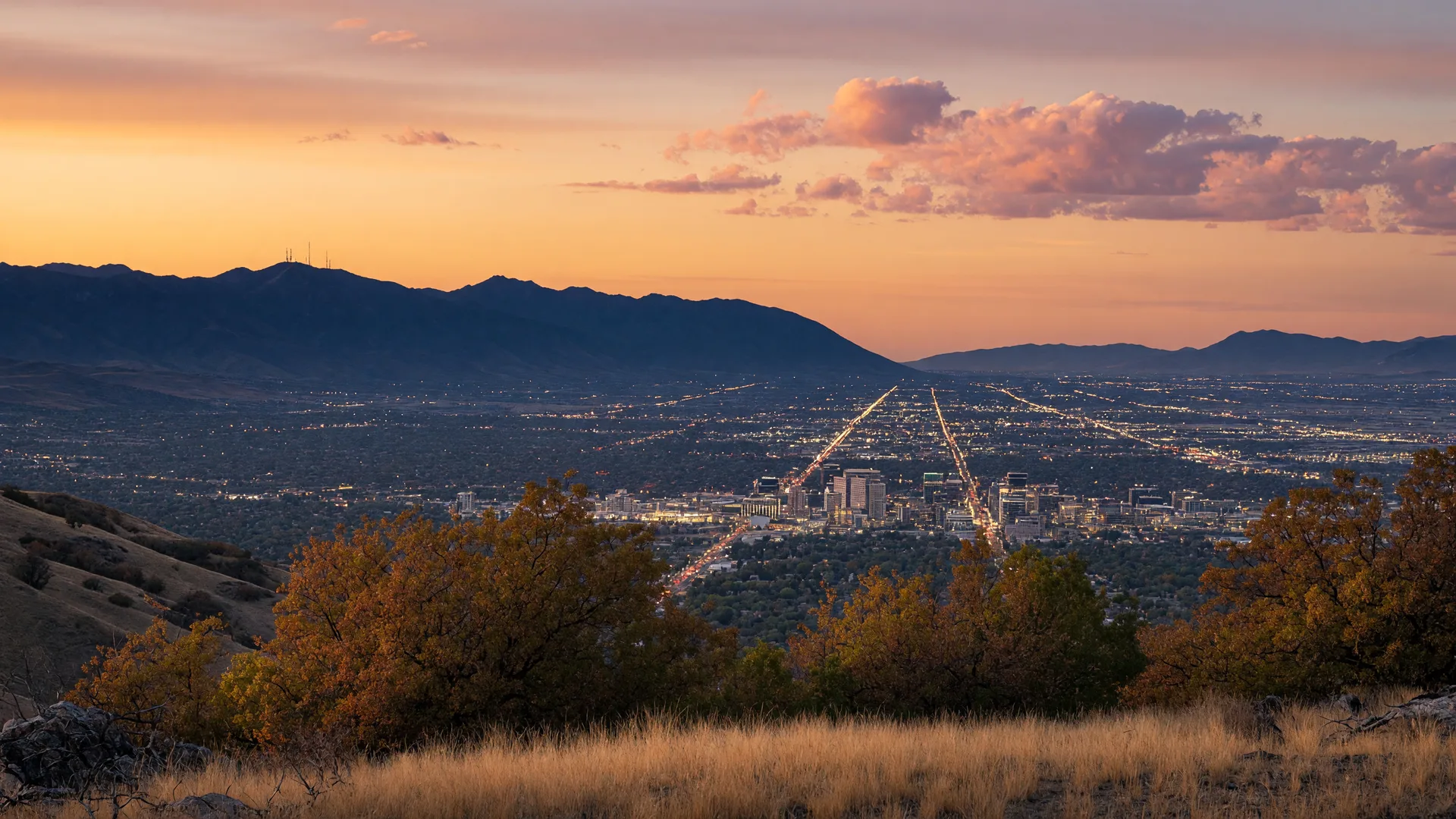
East Side vs. West Side: Salt Lake Valley's Two Worlds
Within the Salt Lake Valley, the east bench and the west side genuinely feel like different places, and both are great places to live. Geography, commute, and housing explain most of the difference. Here is how the valley's two halves actually compare.
What's in this guide
Geography and Vantage
The east side of the Salt Lake Valley climbs onto the foothills of the Wasatch Range, which means higher elevation, bigger mountain views, and some of the best canyon access in the state. Big Cottonwood Canyon, Little Cottonwood Canyon, and Parleys Canyon all open out of the east bench, so a ski trip or an alpine hike starts right at your neighborhood's edge. The trade-off is terrain: streets get steeper, lots get more sloped, and winter canyon traffic can back up into the neighborhoods. Elevation also does a small job of moderating summer heat on the bench, though the difference day to day is modest.
The west side sits on the wider, flatter floor of the valley, with the Oquirrh Mountains running along its far edge. The land here has long been where the valley had room to grow, and that shows in newer streets, larger development patterns, and wide-open sunset views across the Oquirrhs every evening. You trade the up-close Wasatch wall for a bigger sky, and for residents who orient their week toward downtown or the west, the flat roads make everyday driving easy.
Housing and Neighborhoods
In relative terms, the east bench has historically priced higher, and that pattern still holds broadly. The housing stock leans older and more established: mature trees, brick mid-century homes, a mix of older single-family streets and pockets of newer infill, with foothill subdivisions carrying some of the valley's most premium addresses. If you like classic neighborhoods with character and are willing to pay for location and views, the east side is where that inventory lives.
The west side is where the valley's new construction concentrates. Subdivisions have gone up in waves over the past two decades, so the housing stock is generally newer, with more contemporary floor plans, bigger garages, and more attainable prices in many neighborhoods. The quieter blocks and broader streets suit people who want a newer home without the foothill premium. You can often get more square footage for the same budget than you would a few miles east, with spectacular sunset views from your own backyard as a bonus.
A fair warning in both directions: the east bench has fewer, pricier options and older homes that can come with maintenance; the west side's newer neighborhoods are further from the canyons and have grown fast enough that schools and streets have sometimes had to catch up. Neither side is a monolith, and both have submarkets at every price level, so the address-level comparison always beats the side-level one.
Commute and Transit
Commuting cuts both ways. The east side is closer to the canyons but has fewer major arteries, so morning traffic funnels onto the same handful of east-west roads and the I-215 and I-80 interchanges, creating predictable chokepoints. Drive times to downtown from the east bench are short when traffic is clear and can double at peak hours when canyon-bound weekend traffic spills onto surface streets.
The west side has the freeway advantage. I-215 arcs down the west bench, I-80 runs west toward the airport and beyond, and the valley's transit spine, including TRAX light rail and commuter rail corridors, threads through western and central stops before reaching downtown. Whether you commute into Salt Lake City or travel west and south out of the valley, the west side often delivers a straighter shot with fewer bottlenecks. From many west-side addresses, you can be on the freeway in under ten minutes and downtown in twenty during reasonable traffic.
The valley is not big, and the honest answer is that neither side has monopoly on a bad commute. It comes down to where your job sits, which freeway you use, and whether your week leans toward downtown or toward the mountains.
Schools and Amenities
District coverage varies by exact address across the valley, and both sides are served by a mix of public districts and charter options, so the school question is decided by your street, not by your side of the valley. The east side has the long-established neighborhoods and the amenities that grow up with them: older shopping districts, community centers, and easy access to the university and hospital cluster near the top of the valley. The west side has been adding its own commercial cores and recreation centers at a fast clip as the population has grown, and it has the room for newer schools, parks, and sports complexes.
For everyday life, the east side tends to feel more mature and more connected by city feel, with canyon recreation practically in the neighborhood. The west side feels newer and roomier, with big-box convenience, newer schools, and quick freeway access to anywhere you want to go. Families should look at assigned schools and parks around the specific home they are considering; neither side has a blanket advantage, and both have neighborhoods that check every box.
Quick Answers: East Side vs. West Side FAQ
Is the east side more expensive than the west side?
In relative terms, yes, on the whole: the east bench has historically carried the valley's highest prices, especially for foothill and canyon-adjacent homes. The west side generally offers newer construction at more attainable prices, and you can often get more home for the budget. As always, compare specific neighborhoods, because both sides have premium pockets.
Which side has better canyon access?
The east side wins this one hands down. Big Cottonwood, Little Cottonwood, and Parleys canyons all start on the east bench, so ski days and alpine hikes begin practically at your door. West-siders reach them too, they just add freeway time to the trip.
Is the west side safe?
Safety is a neighborhood-by-neighborhood question on both sides of the valley, not a side-wide one. The right way to answer it is to research the specific block and city, talk to locals, and spend time in the neighborhood at different hours. Both sides contain a wide range of streets, and neither deserves a blanket label either way.
Which side is better for commuting downtown?
Both are workable, and the answer depends on your route and hours. Many west-side residents get to downtown quickly on the freeway or transit lines with fewer bottlenecks, while east-siders use the bench arterials and have canyon-bound weekend traffic to plan around. Test your actual route at your actual hours.
Which side of the valley fits your routine?
Both sides of the valley welcome everyone, and the best choice comes down to where your work, school, and weekends actually take you. If you want help comparing specific east-side and west-side neighborhoods, I am glad to walk you through it with honest detail.
Reach Out