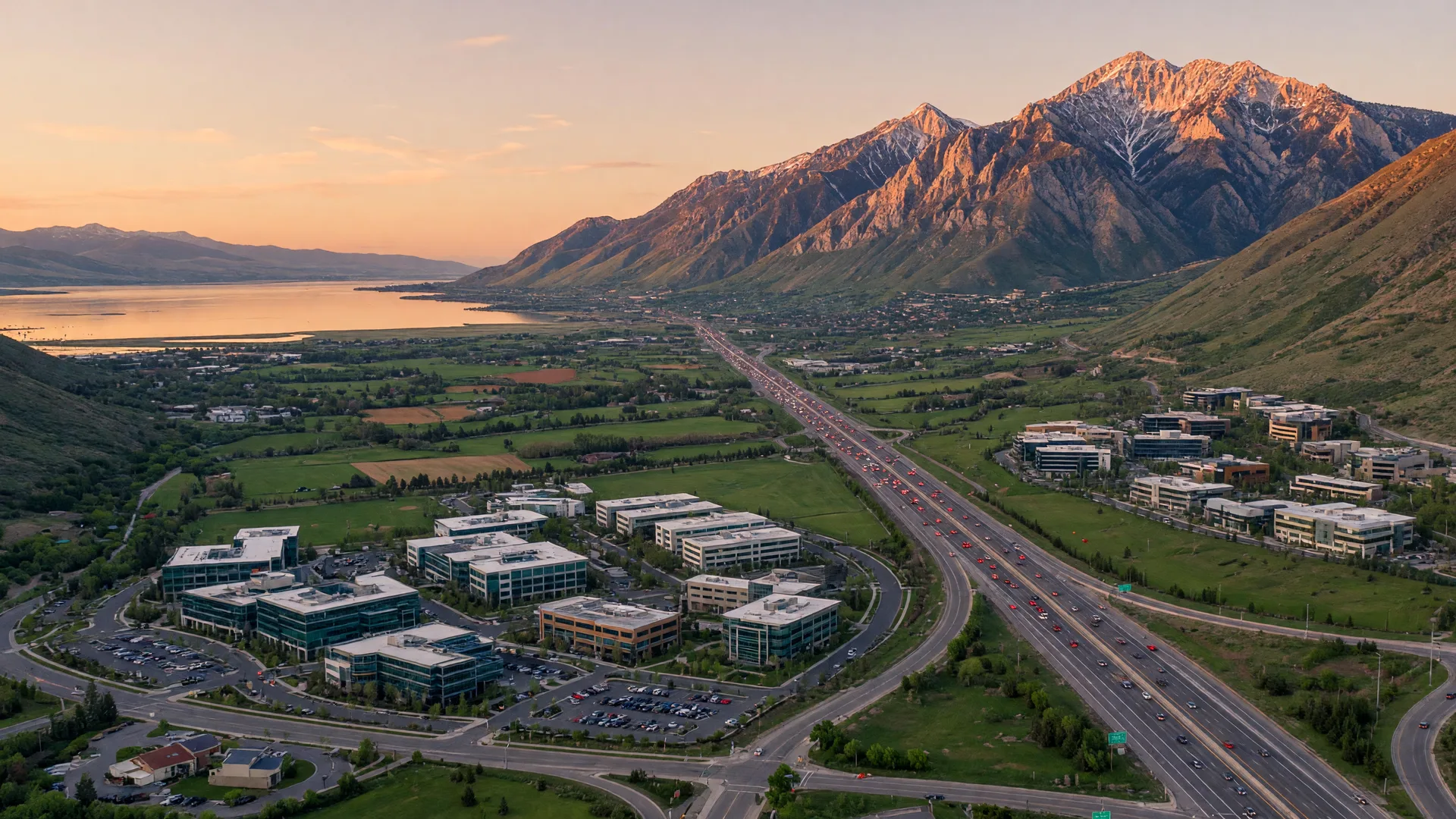
Lehi vs. Provo: The Silicon Slopes Showdown
Lehi and Provo sit barely twenty miles apart at the heart of Utah's Silicon Slopes, and between them they anchor one of the fastest-growing tech regions in the country. Both are magnets for tech workers and families, so this comparison usually comes down to three things: your commute, whether you want new construction or established neighborhoods, and how much college-town energy you want in your everyday life.
What's in this guide
Jobs and the Economy
If there is a capital of Silicon Slopes, it is Lehi. The city and the corridor right around it hold the densest concentration of tech campuses in the state: hundreds of companies along the I-15 corridor, from large software and cloud firms to a deep bench of startups, fintech, and the support companies that serve them. For anyone working in tech, product, or engineering, Lehi can put your office a handful of minutes from your front door, which is a genuine luxury on the Wasatch Front.
Provo runs on a broader mix. Brigham Young University anchors the city, and around it has grown a healthy technology economy of its own, from campus spinoffs to homegrown startups, alongside a major healthcare presence, professional services, and a strong entrepreneurship culture that the university feeds. The result is a job market with more variety than people often assume: more than tech, though tech is loudest.
Both cities are growing fast and adding jobs quickly, and both ride the same regional wave our Utah County vs. Salt Lake County guide describes in detail. The practical difference is density: Lehi wins when your work is in the northern tech corridor, Provo wins when your work is downtown, at the university, or in healthcare. Few people moving here have trouble finding work in either city; the question is which one shortens their drive.
The Commute
Commuting is where this comparison gets concrete. Lehi sits right on I-15 near the Point of the Mountain, which means fast access north to Draper, Sandy, and the southern Salt Lake Valley, and a surprisingly quick reach into downtown Salt Lake City when traffic cooperates. It also has a FrontRunner station, so a no-driving commute to the north is a real option for people who work near a rail stop.
Provo is further south, and its commute reality is defined by one honest fact: the morning traffic between Provo and Lehi runs heavy in both directions, but the heaviest flow is northbound, because a huge number of people live in Provo and Orem and work in the Lehi tech corridor. If your job is in Lehi and your home is in Provo, you are driving against the biggest crush of it, and the same is true in reverse in the afternoon. On the other hand, Provo's downtown FrontRunner station is the southern anchor of the commuter rail line, so a train commute to Lehi, Draper, or Salt Lake City sidesteps the freeway entirely if you can use stations at both ends.
For everything between the two cities, the distances are short in miles and long in minutes at peak hours, which is exactly why so many Silicon Slopes workers simply choose to live on the side of the valley where their office sits.
Honest advice:
Before you commit, drive the route at the exact hours you would commute. The Sunday version of the I-15 drive between Provo and Lehi is pleasant; the 8 a.m. version on a Tuesday is a different animal.
Housing: New Build vs. Established
In relative terms, Lehi is the new-construction capital of the two. Much of its housing stock has gone up in the last couple of decades, organized into master-planned communities with consistent modern floor plans, community pools, and amenity centers, plus a steady pipeline of new builds on the city's edges. If you want a newer home with modern finishes and a neighborhood that feels like it was designed as a unit, Lehi delivers that at volume.
Provo is the opposite in the best way: it has more history, and its housing reflects it. You will find established neighborhoods with mature trees and older character near downtown, rentals and apartments concentrated in the student areas around BYU, and newer construction in south Provo and along the east bench. The city offers a wider variety of home types, from starter condos to family houses, which is part of what makes it popular with buyers at every stage.
Here is the honest relative picture: both Lehi and Provo are generally more attainable than the priciest Salt Lake Valley areas, which is a large part of why Utah County keeps growing. Within the pair, the comparison is neighborhood by neighborhood rather than city by city, because each city has both premium pockets and quieter, more affordable ones. Our cost of living guide digs into what everyday expenses look like across Utah if you want the full breakdown.
Lifestyle: Master-Planned vs. College Town
The everyday feel of the two cities is genuinely different. Lehi is family-oriented master-planned living: broad streets, community parks, convenient retail within a short drive, and a quieter weeknight rhythm. Its growth has brought constant commercial development, so errands, groceries, and dining options are convenient almost everywhere you live.
Provo has college-town energy that Lehi simply does not have. BYU brings tens of thousands of students, and with them comes a lively dining scene, a full events calendar, university sports and arts, and a downtown that keeps getting better. The city is also ringed by mountainside neighborhoods on the east bench with some of the best views in the valley, and its proximity to Provo Canyon means outdoor recreation is minutes away in three different directions.
Both cities share the same spectacular backyard: Provo Canyon, Utah Lake, the Alpine Loop foothills, and the whole Wasatch mountain playground are within a short drive of either front door. The realistic difference is what you do on a Tuesday night. Lehi is the suburb that grew up around a tech corridor; Provo is the college town that grew a tech economy of its own.
Schools and Universities
As public services, schools are strong in both cities, and as everywhere in Utah the assignment is tied to your exact address. Lehi is served by the Alpine School District, one of the largest in the state, with schools spread across Lehi, American Fork, and surrounding communities. Provo has its own Provo City School District with neighborhood elementary schools feeding the city's junior highs and high school. Families should check the boundary and the specific assigned school for any home they are considering, because within-district differences matter more than district reputations.
Higher education is the crown jewel here. Provo is home to Brigham Young University, one of the largest private universities in the country, whose footprint shapes the whole city. Utah Valley University sits just to the north in Orem, a short drive from both cities, and Lehi residents regularly commute to jobs at both institutions or take advantage of their programs. Whatever you are planning, a major university is close enough to shape culture, jobs, and continuing education on either side of this comparison.
Quick Answers: Lehi vs. Provo FAQ
Which has better job opportunities?
Lehi wins for pure tech density, with hundreds of companies in the Silicon Slopes corridor. Provo has a broader mix: BYU, healthcare, professional services, and its own strong startup scene. If your career is tech, either works; if it is healthcare or education, Provo leans stronger.
Is Lehi or Provo more expensive?
In relative terms they are close, and both are generally more attainable than the priciest Salt Lake Valley neighborhoods. Lehi skews toward newer master-planned inventory; Provo has a wider range from older established homes to new south Provo builds. Compare specific neighborhoods in the same week rather than relying on an old impression of either market.
Which is better for families?
Both are genuinely family-friendly with strong school districts, parks, and low-crime communities. Lehi is the classic family suburb: master-planned neighborhoods, big parks, and community amenities. Provo offers the same family support with more established character and university activities. The assigned school usually tips the decision.
Which is better for young professionals?
If your office is in the Lehi tech corridor, Lehi means the shortest possible commute. Provo offers more of a social scene, a walkable downtown, university events, and a younger crowd overall. Many young professionals start in Provo for the energy and move to Lehi when they want more space.
How far apart are they really?
About twenty miles apart door to door, roughly twenty-five to thirty-five minutes by car in normal traffic. At peak commute hours the drive can stretch with congestion around the Lehi interchanges, so the practical distance depends entirely on when you travel. A FrontRunner ride connects the two without traffic.
Which has better mountain access?
They are close enough that it barely matters: Provo Canyon sits between the two cities, and the Alpine Loop, American Fork Canyon, and the surrounding foothills are minutes from either one. Provo's east bench has the most direct trailhead access, while Lehi's west and north edges reach the corridor's foothills quickly too.
Still choosing between Lehi and Provo?
Utah's communities welcome everyone, and the best fit is the place that works for your commute, your budget, and your weeknights. If you are comparing specific Lehi and Provo neighborhoods, I would be glad to walk through them with you and share the honest upsides and trade-offs of each.
Reach Out