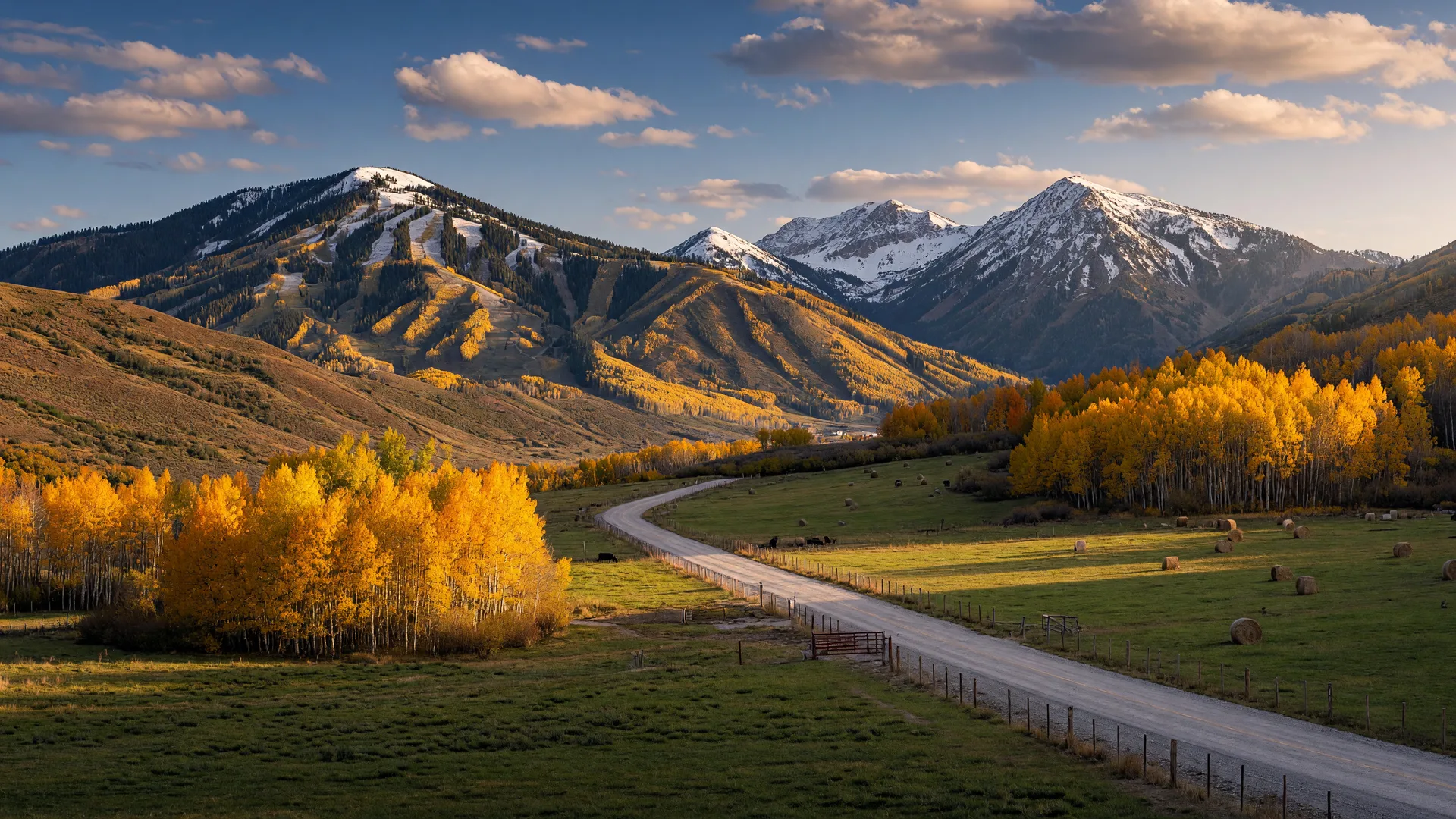
Park City vs. Heber City & Midway: Mountain Town or Mountain Valley?
Park City, Heber City, and Midway are three of Utah's most beloved mountain communities, and they sit within twenty minutes of one another. Park City is world-famous resort living; Heber and Midway offer the same mountain lifestyle at generally more attainable prices. The real question is whether you want the resort scene or the valley life.
What's in this guide
The Resort Town: Park City
Park City needs little introduction. It is one of the great resort towns of North America: world-class skiing at Park City Mountain and Deer Valley, the famous Historic Main Street with its galleries, restaurants, and boutiques, the Sundance Film Festival, and a year-round events calendar that never really slows. Live music, festivals, art openings, and a genuinely vibrant dining scene make it feel like a big city that happens to be surrounded by ski runs.
The flip side is that Park City is a resort economy, and resort economies are expensive. Prices for housing and everyday goods run at the premium end of the state, tourist traffic is a constant in high season, and the town's identity is woven tightly around the visitors who sustain it. For many people that energy is the whole point. For others it is the exact reason to look ten miles down the road.
If you want the fullest mountain-town scene in Utah, with the best skiing access in the West and an unending social calendar, Park City delivers like nowhere else in the state. Our Park City guide goes deeper on what living there is actually like day to day.
The Mountain Valley: Midway and Heber City
Head a short way down the valley and the resort switches to rural. Midway wears Swiss-style charm openly: the Homestead and Zermatt resorts anchor its identity, the historic Main Street keeps a small-town feel, and the pace is slower and neighborly. It is the classic answer for someone who wants mountain living without the resort hubbub, with easy summer access to Snowbird and the high country over Guardsman Pass.
Heber City is the practical hub of the Heber Valley: the place with the full services, the new master-planned growth, and the everyday conveniences families actually need. Its economy and retail have expanded quickly as people discover the valley, and it sits with easy reach of both Park City to the north and Provo Canyon to the south. For anyone who wants the outdoor lifestyle plus grocery stores, schools, and services without a resort markup, Heber is the center of gravity.
Together the two towns cover each other's gaps: Midway supplies the charm and slower moments, Heber supplies the services and growing neighborhoods, and both share the valley's big-sky setting against the Wasatch and Uinta ranges.
Recreation All Around
Recreation is the region's real currency, and all three towns are surrounded by it. The Wasatch Back is a four-season playground: world-class winter sports at Park City's resorts and beyond, miles of mountain biking and hiking trails out of every neighborhood, and Jordanelle and Deer Creek reservoirs minutes away for boating, paddleboarding, and fishing in summer. The Heber Valley Railroad adds a nostalgic landmark, and the alpine scenery changes with every season.
The practical difference is how you access it. Park City puts you inside the resort world, with lifts and trailheads in your backyard but lift tickets and crowds to match. Heber and Midway give you room to breathe: quieter trailheads, valley floors for road rides, and the same mountains visible in every direction. Skiers in Heber and Midway drive a bit farther to the resorts but often spend far less to live there, and Guardsman Pass and Provo Canyon keep the high country close in summer.
Housing and Cost
The relative picture is straightforward and is usually the deciding factor. Park City sits at the premium end of Utah housing: resort-town pricing, limited land, and strong demand for both primary and second homes keep values and rents high. It buys you the world-class scene and the resort infrastructure, and you pay accordingly.
Midway and Heber City are generally more attainable, with a wide range of newer construction, from single-family neighborhoods in growing master-planned communities to acreage properties on the valley floor. They offer more house and more land for the money than Park City, which is why so many families and remote workers choose the valley. The honest caveat is that the Wasatch Back has repriced quickly: these are no longer sleepy farm towns, and resort-area demand spills into the valley.
A related reality worth naming is that resort areas carry higher costs and shorter-term rental dynamics that can affect neighborhoods and inventory. If you want a primary home with predictable neighbors and fewer rental turnovers, the valley towns generally deliver that more consistently than the resort core.
Commute and Practicality
Practicalities are where the valley towns earn their keep. Heber and Midway have built up their services quickly, and drives from Heber to the valley floor, Salt Lake County and Provo alike, run about thirty to forty minutes depending on the route and the season. Heber sits at the junction of the routes north to Park City and south through Provo Canyon, which gives it rare flexibility for people with jobs or family on either side of the mountains.
Park City's commute to Salt Lake City is the mirror image: about thirty to forty minutes via I-80 most days, longer in snow or weekend ski traffic. It is a well-worn route, and plenty of people make the drive daily, but winter storms test it regularly. On balance, if you work in the Salt Lake Valley, neither option is a quick commute, and both demand a car and some patience in winter.
For daily life inside the region, Heber and Midway win on practicality, Park City wins on proximity to its own amenities, and all three sit close enough that a night out in any of them is an easy drive from the others.
Honest advice:
Spend a winter weekend in the valley before you commit. The mountain towns are glorious in summer, and a January storm tells you whether the commute and the snow totals fit your actual life.
Quick Answers: Park City vs. Heber & Midway FAQ
Is Heber cheaper than Park City?
In relative terms, yes, generally: Heber and Midway offer more house and land for the money than Park City's resort core, thanks to newer construction and available valley land. The gap has narrowed as the area has grown, and the Wasatch Back is no longer a bargain by national standards, but Park City still carries the premium.
Can I commute to Salt Lake from Park City?
Yes, thousands of people do it daily via I-80, about thirty to forty minutes in good conditions. Winter storms and ski traffic can stretch that considerably, so it works best for commuters with flexible hours or a tolerance for mountain weather. Heber's routes to Utah County run similar lengths through Provo Canyon.
Is Midway close to skiing?
Very. Park City's resorts are a short drive up the valley, and the Homestead and Zermatt resorts in Midway itself offer cross-country and Nordic-style winter recreation plus the resort amenities. In summer, Guardsman Pass connects to the Snowbird and Alta side of the Wasatch for day trips.
Which is best for families?
Heber City is the classic family pick: full services, growing master-planned neighborhoods, schools, and the valley's big backyard, all without resort prices. Midway adds charm at a calmer pace. Park City is wonderful for families who can afford it and want the resort lifestyle, with excellent schools and programs, just at a much higher cost of entry.
Which is best for retirees?
Midway is a longtime favorite for its calm charm, resort amenities, and slower pace, with Heber's services minutes away. Park City appeals to active, social retirees who want the events and dining scene year-round. All three are active-community magnets; the choice is between quiet and energetic.
How close are they to each other?
Close enough that geography barely separates them: Park City, Midway, and Heber City all sit within about fifteen to twenty minutes of each other by car along the valley roads. Residents use all three like one community, and the practical differences are about cost, pace, and services rather than distance.
Resort town or mountain valley?
Utah's communities welcome everyone, and the best fit is the place that matches your budget and your rhythm. If you are weighing Park City against the Heber Valley, I am glad to talk through neighborhoods, commutes, and costs with you and share the honest local picture.
Reach Out