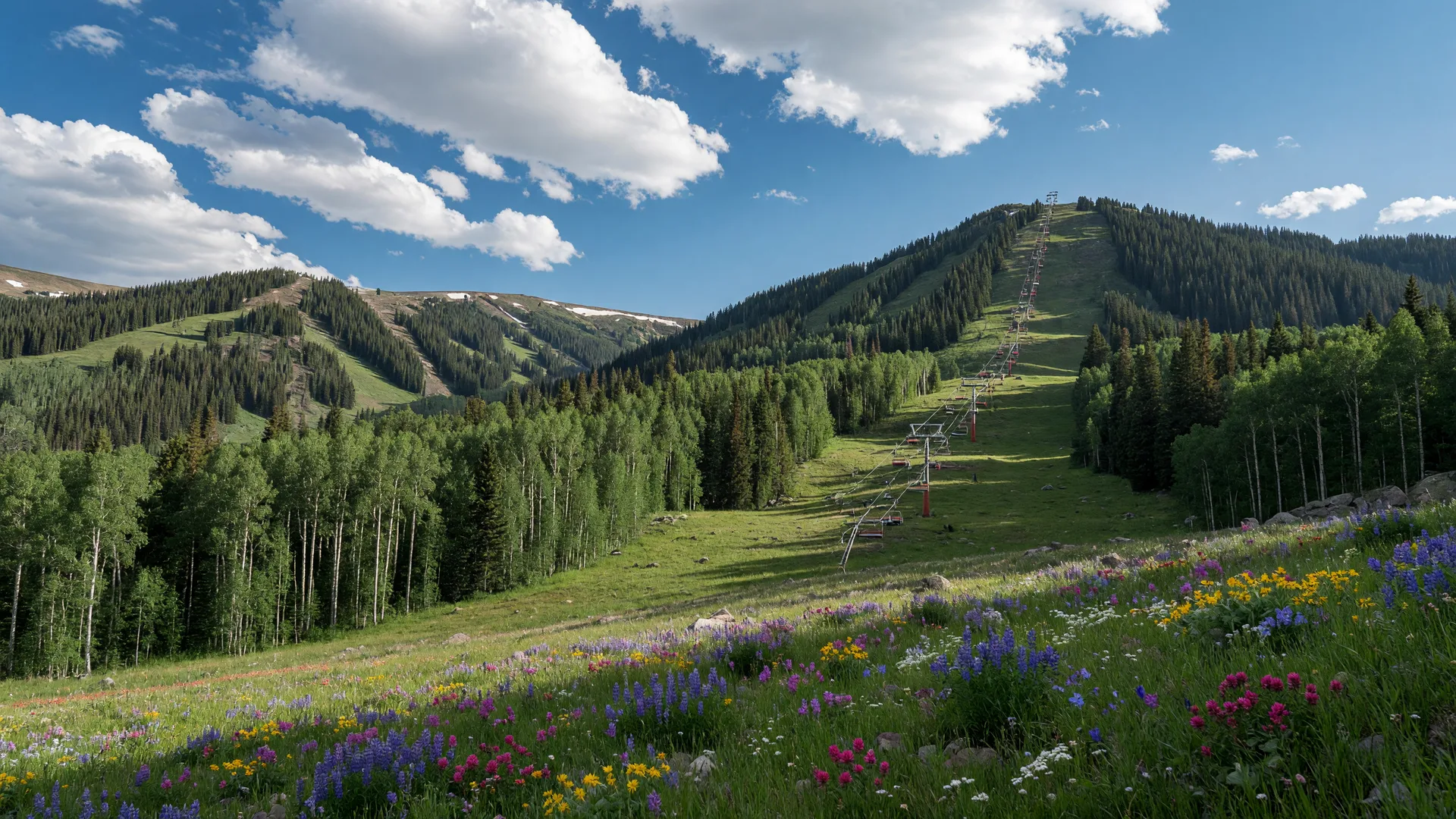
Brian Head
Utah's highest town at nearly 9,800 feet: southern Utah's only serious ski resort in winter, wildflower meadows and mountain biking in summer, and the polar opposite of the red-rock desert an hour below.
Overview & Character
Brian Head is Utah's highest town, perched at nearly 9,800 feet on the Markagunt Plateau, and it is nothing like the rest of southern Utah. Where the desert cities bake in red rock heat, Brian Head buries itself in snow and blooms with wildflowers, and the change of scene happens in a single winding half-hour drive.
The town exists for the mountain. Brian Head Resort gives southern Utah its only serious ski area, and in summer the same lifts rise over meadows and singletrack. It is a place of cabin culture: fireplaces, ski racks, rental properties, and families who made the mountain their second home, with a small core of full-timers who keep the lights on year-round.
The character is unpretentious and weather-driven. Nobody moves to Brian Head for the shopping. They come for the deepest snow in the region, the quiet of the high country, and a dramatic alpine scenery that makes the desert below look like a different planet.
What Newcomers Should Know
Brian Head is a resort community with resort realities. Context that matters:
Lifestyle
Life at 9,800 feet follows the snow. Winters are for first chair, afternoon powder turns, and long evenings in front of the fire. Summers flip to wildflower hikes, alpine rides, and cool nights that the rest of Utah envies. The community is small and seasonal, built around the mountain and the people who love it.
It is not an everyday suburban life, and that is the appeal. The grocery run means a drive to Cedar City, the school run means the same, and the trade is living in one of the most beautiful, uncrowded corners of the Utah mountains. For skiers and second-home families, there is no better version of the dream.
Recreation & Things to Do
Two distinct seasons, both excellent:
Weather & Climate
At nearly 9,800 feet, Brian Head is the coldest place in southern Utah, and the snowiest. Winters bring deep, reliable snow from about November into late spring, with real cold that keeps the base solid. Summers are short, mild, and glorious, with bright wildflower season and nights that require a jacket even in July.
The altitude is part of every day: the air is thin, the sun is strong, and the seasons move fast. For anyone coming from the desert an hour below, the transition is abrupt and wonderful, which is precisely the point.
Cost of Living
Brian Head offers a ski-town lifestyle at a fraction of the Park City price. Cabins and condos here run well below the Wasatch Front's resort addresses, which is the whole draw for second-home buyers and investors, though the market is seasonal and inventory is limited.
The practical costs are mountain costs: heating at altitude is the big utility line, groceries carry a remote premium, and everyday shopping means a drive to Cedar City. Utah's flat 4.45% income tax (2026) and no-tax-on-Social-Security rule apply, and for the lifestyle on offer, the numbers usually work out nicely.
Schools & Education
Brian Head is part of the Iron County School District, with students based out of Cedar City, about 30 minutes down the mountain. The year-round population is small, so most families with school-age kids treat the drive as part of the plan and rely on Cedar City's schools.
For most residents, education in Brian Head means something else entirely: being able to read a snow forecast, drive a mountain road safely, and know that the best classroom in southern Utah is a trail, a summit, or an alpine meadow.
Commute & Practicalities
The commute from Brian Head is usually vertical: up the mountain to the resort, or down State Route 143 to Cedar City for work, school, and shopping, about 30 minutes of winding mountain road. Winter conditions are the constant companion, and snow tires are non-negotiable.
Practical notes: stock up on groceries when you are in Cedar City, keep a plan for power and heat in storms, and treat the altitude with respect at first. Do those things and Brian Head goes from dramatic to delightful remarkably fast.
Pros & Cons
Pros
- Utah's highest town, at nearly 9,800 feet of genuine alpine air
- Home to southern Utah's only serious ski resort
- Wildflower meadows and lift-served mountain biking in summer
- Dramatic alpine scenery that is the opposite of the desert below
- A tight community of cabin owners, second-home families, and snow lovers
- Cedar City is just 30 minutes down the mountain for services
Cons
- Tiny year-round population with a seasonal economy
- Long, snowy winters and a short summer season
- Services in town are minimal, so most errands head to Cedar City
- Most housing is cabins and rentals, not full-time homes
- Mountain roads and snow require real winter driving skills
Who Is Brian Head Best For?
Moving to Brian Head: Common Questions
What people always ask about the highest town in Utah.