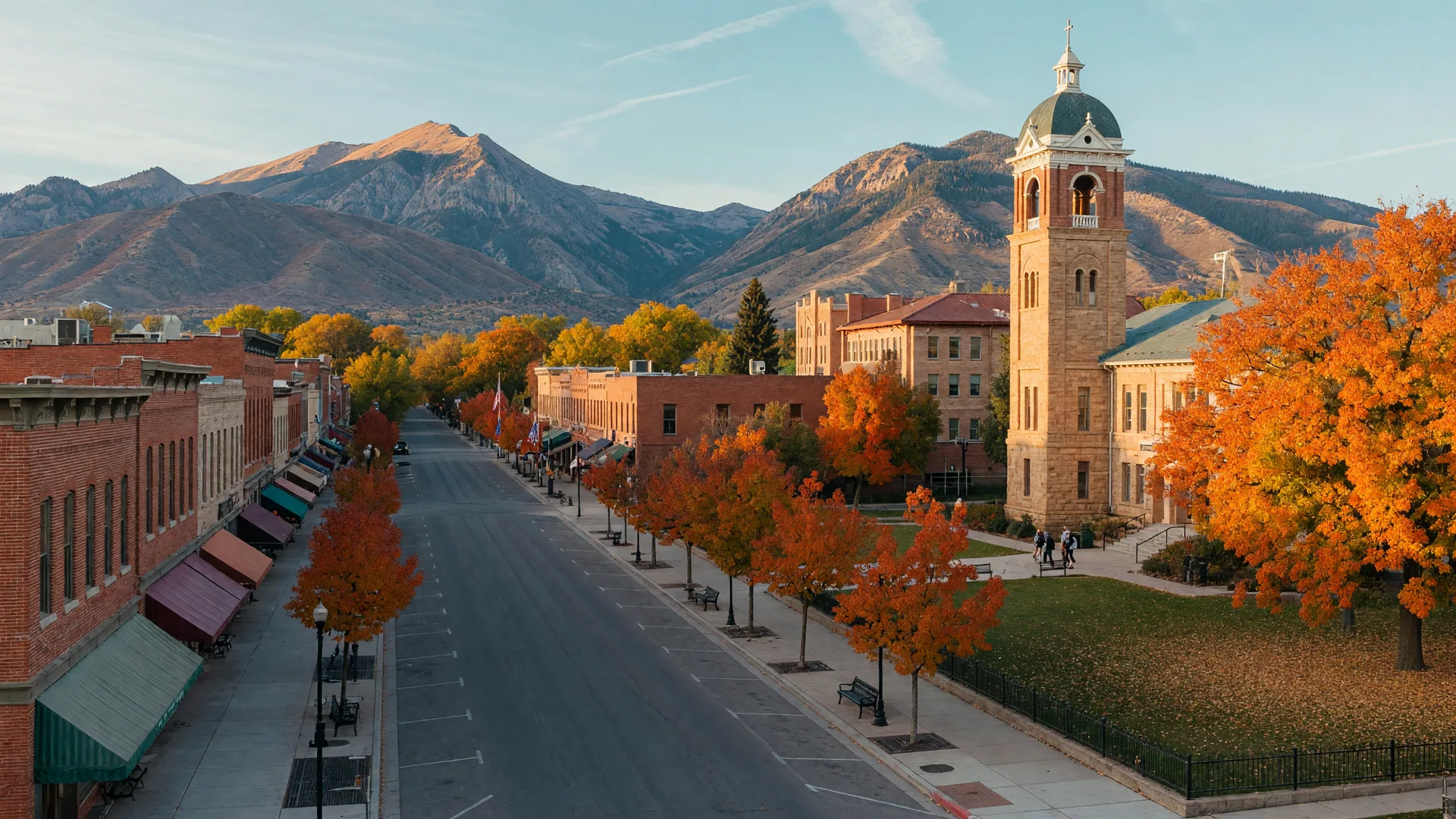
Cedar City
Southern Utah's cultural and university hub: the Shakespeare Festival, four real seasons, a thriving college-town energy, and Brian Head skiing 30 minutes away.
Overview & Character
Cedar City is Southern Utah at elevation: a college town and cultural hub sitting at nearly 6,000 feet beneath the high plateaus, with a rhythm driven by Southern Utah University, the Tony Award-winning Utah Shakespeare Festival, and the mountains that ring the valley. It is the region's answer to the question of what happens when you want Utah without either the desert heat or the Wasatch Front crowds.
The city has a genuine small-city feel: a walkable downtown, a storied theater festival that draws international audiences, and a university that fills the streets with students, events, and ideas. Around it, family neighborhoods climb the valley sides and look out at million-acre views.
The character is quietly ambitious and proud of it. Cedar City residents will tell you they have the arts of a big city and the pace of a small town, with the best ski resort in southern Utah up the road and four honest seasons to enjoy it all in.
What Newcomers Should Know
Cedar City surprises newcomers in mostly pleasant ways. The context to have before you move:
Lifestyle
Life in Cedar City follows the seasons and the university calendar. Summers are a stream of Shakespeare productions, outdoor concerts, and mountain escapes. Falls bring golden aspen and festival crowds. Winters mean snow days, skiing at Brian Head, and a town that glows under a blanket of white. Springs are a rush of green and graduation.
The outdoor scene is developing fast: trail systems, climbing, mountain biking, and a growing roster of runners and paddlers. Add the college-town dining and coffee scene and a compact, walkable downtown, and you have a lifestyle that feels far bigger than the population suggests, at a cost that does not.
Recreation & Things to Do
Cedar City stacks arts and altitude better than almost any small city in the West:
Weather & Climate
This is the big difference between Cedar City and the desert towns an hour south. At nearly 6,000 feet, Cedar City gets real seasons: mild, sunny summers rarely as hot as St. George, crisp and colorful autumns, and winters with genuine snow and cold that accumulate but stay manageable. Spring is the wildcard, with occasional storms and fast green-up.
Locals love the variety: sledding in the yard, fall drives through the aspens, and summer evenings that actually cool off. If your idea of Utah includes winter, Cedar City delivers it in full.
Cost of Living
Cedar City is one of the stronger value plays in the entire state. Housing runs well below the Wasatch Front and generally below the St. George metro, which is a large part of why families, students, and remote workers keep finding it. Rent markets are student-influenced but still reasonable.
Day-to-day costs track close to national averages, with winter heating balancing out the summer cooling that dominates the southern deserts. Utah's flat 4.45% income tax (2026) and no-tax-on-Social-Security rule apply here as everywhere in the state, keeping the monthly math friendly.
Schools & Education
Cedar City is served by the Iron County School District, and like the city itself, the schools are supported by a community that values both education and the arts. K-12 options are strong for a city this size, with a range of programs that reflect the college-town culture.
Higher education is the anchor: Southern Utah University is the heartbeat of the city, with roughly 15,000 students, strong programs across the arts and sciences, and a presence that fills the event calendar year-round. For families, that means a city that treats learning, theater, and community as civic priorities.
Commute & Practicalities
Cedar City is compact, and most commutes are short. I-15 runs right through town, connecting you to St. George in under an hour and Las Vegas in about 2.5 hours, with Salt Lake City roughly 3.5 hours north. Brian Head Resort is 30 minutes up State Route 143, and winter drivers learn that mountain road quickly.
Practical notes: the airport is small but functional, snow removal is dependable, and the biggest shopping trips will eventually point toward St. George or Las Vegas. For the day-to-day, everything you need is in town.
Pros & Cons
Pros
- Real four seasons, including snowy winters and mild summers
- Southern Utah University brings college-town energy and events
- Home of the Tony Award-winning Utah Shakespeare Festival
- Brian Head skiing and summer trails are 30 minutes away
- One of the more affordable cities in Utah
- A blossoming outdoor and cultural scene without the crowds
Cons
- Winters are genuinely cold and snowy, a real change from St. George
- Fewer big-city services and shopping options
- The job market is smaller and leans on education, healthcare, and tourism
- Tourism and festival weekends bring crowds to the small downtown
- If you want desert heat year-round, this is the wrong town
Who Is Cedar City Best For?
Moving to Cedar City: Common Questions
Honest answers for people weighing the move.