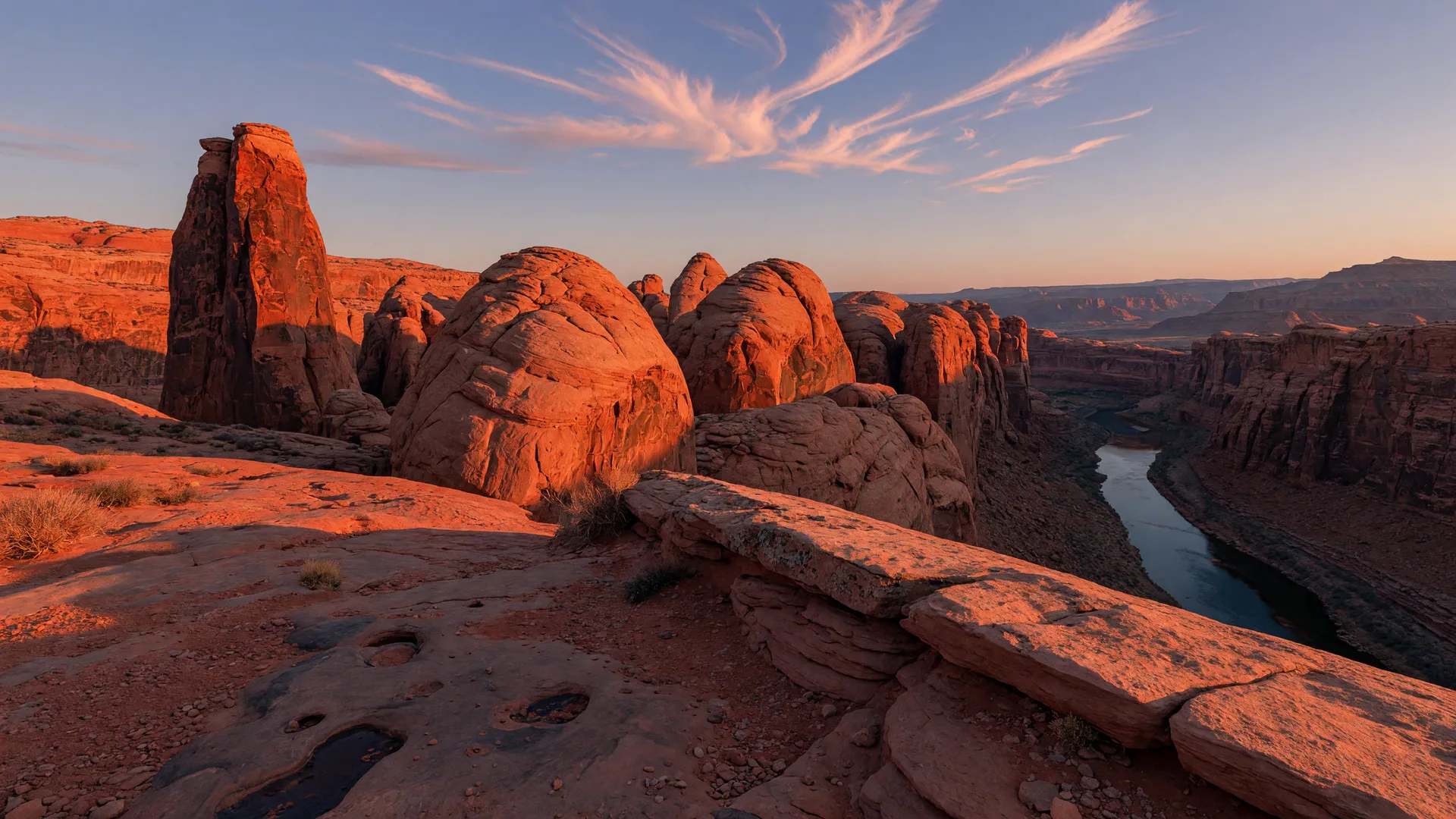
Moab
Utah's mountain-biking and adventure capital at the doorstep of Arches and Canyonlands, where red rock towers, slickrock trails, and the Colorado River are the daily scenery.
Overview & Character
Moab, population around 5,000, is one of the most famous small towns on earth. It sits in a red rock bowl where Arches National Park crowds one edge of town and Canyonlands sprawls beyond, with the Colorado River cutting through the middle. It is the adventure capital of Utah, and the travel magazines all but live here.
Behind the tourism, Moab is a real town of outdoor-industry workers, guides, artists, and service pros who chose slickrock over suburbs. The economy rides tourism, and the town swells in the shoulder seasons when the weather is perfect and the world comes to play. Housing is scarce and competitive, which is the honest price of living in paradise.
The character is warm, rugged, and a little unusual: neighbors are as likely to compare saddle notes as split-rail fences, community life revolves around trails and rivers, and everyone knows the value of an empty winter trail.
What Newcomers Should Know
Moving to Moab is equal parts dream and logistics. The honest rundown:
Lifestyle
Moab life is scheduled around light and weather. Workdays bookend with rides on the Slickrock Trail or laps at the climbing crags, weekends run to Arches or the river, and winter is the locals season when the tourists thin out and the town exhales. It is a small-town social scene with an unusually fit, interesting community.
The trade is scale: modest shopping, a quiet nightlife beyond the tourism strip, and a healthcare system that points you to Grand Junction for the serious stuff. For people who measure wealth in trail miles and canyon sunsets, it is the best trade in Utah.
Recreation & Things to Do
There is no town in Utah with a deeper outdoor roster:
Pickleball has found its way to Moab too, with courts at the community center and a growing crew of local players happy to meet newcomers on the court.
Weather & Climate
Moab sits at about 4,000 feet on the Colorado Plateau, which gives it a high-desert climate with more bite than St. George: hot summers that still cool off at night, mild springs and falls that are the glory seasons, and winters with cold nights and occasional snow that dusts the red rock.
Sunshine dominates the year, rain is modest, and the famous red rock light, that deep, layered glow at sunrise and sunset, is a daily show. Locals plan summer around morning rides and evening floats, and know that April through June and September through October are worth more than any month on the calendar.
Cost of Living
Moab is the exception to the rural-Utah bargain. Because inventory is so limited and demand is driven by tourism, vacation rentals, and an influx of outdoor and remote workers, housing prices run high for a town of 5,000, comparable to, and sometimes above, the Wasatch Front. Rentals are scarce and seasonal.
Groceries and goods carry a remote-town premium, utilities run above average with summer cooling and desert water use, and the same flat 4.45% state income tax (2026) applies. The honest math: you pay more for daily life here in exchange for a quality of scenery and recreation that has almost no price.
Schools & Education
Moab is served by the Grand County School District, a smaller district that offers the classic small-town advantage: kids are known by name, class sizes stay modest, and the community invests heavily in its young people. The schools are supported and active, with outdoor education woven naturally into the curriculum.
Higher education nearby is limited, with the nearest four-year universities a drive away, so most families plan intentionally around that. For K-12, Moab offers the kind of close-knit schooling many families are actively seeking.
Commute & Practicalities
Commuting in Moab mostly means getting to the trailhead: town is small, traffic is local, and the national park entrances are minutes from anywhere. The regional reality is different. Grand Junction, Colorado, about 1.5 hours away, is the hub for the regional airport, bigger retail, and serious healthcare, and Salt Lake City runs roughly 3.5 to 4 hours north.
Practical notes: summer brings real tourism traffic on Main Street and at the park entrances, water is a precious desert resource, and the local food scene, surprisingly good for the size, leans on the tourism trade. Plan around the seasons and you will love the place.
Pros & Cons
Pros
- Utah's adventure capital: Arches and Canyonlands at the doorstep
- World-class slickrock mountain biking and rock climbing
- The Colorado River runs through town for paddling and fishing
- Tourism-driven economy with steady hospitality work
- A tight-knit community of outdoor people and creatives
- Spectacular shoulder seasons in spring and fall
Cons
- Housing is limited, competitive, and pricey for a town this size
- Tourism means seasonal crowds and traffic in the busy months
- Retail, healthcare, and services are modest for the population
- Summers are hot and water is precious
- It is remote: most big-city amenities are three-plus hours away
Who Is Moab Best For?
Moving to Moab: Common Questions
The questions that come up before anyone moves to Moab.