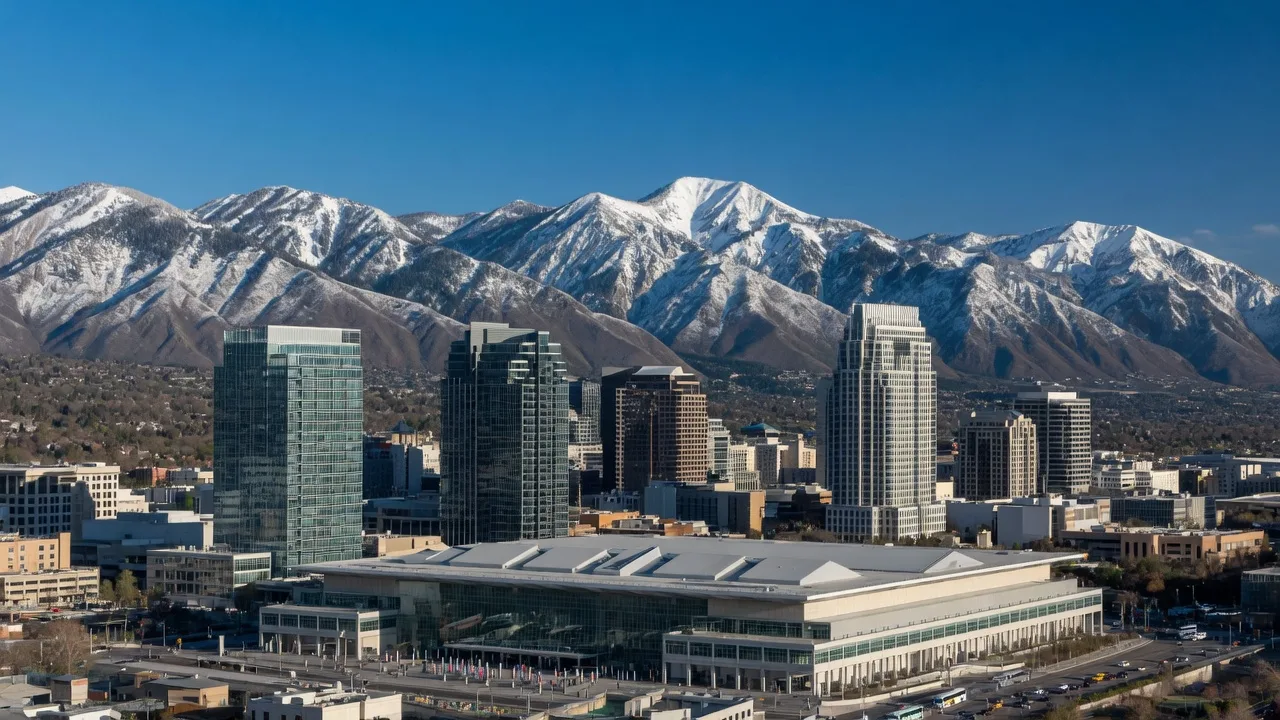
Salt Lake City
The capital and cultural heart of Utah. A city where you can work downtown, ski after work, and dine at a James Beard-nominated restaurant in the same day.
Why Newcomers Pick Salt Lake City
Salt Lake City is Utah's largest metro area and its cultural, economic, and political center. With a metro population of over 1.2 million, it offers the amenities of a major city, mountain access, and a surprisingly livable scale. The city has transformed in recent decades from a quiet regional capital into a dynamic, diverse, and rapidly growing urban center that consistently ranks among the best places to live in the western United States.
Downtown SLC has experienced a renaissance, with new restaurants, breweries, and cultural venues opening regularly. The tech sector is booming, with major employers like Qualtrics, Pluralsight, and dozens of startups anchoring the "Silicon Slopes" identity. And the outdoor access is genuinely world-class: four major ski resorts are within 45 minutes of downtown, and the Wasatch Mountains offer endless hiking, biking, and climbing.
For most people moving to Utah, Salt Lake City is the entry point. It is where the jobs are, where the airport lands, and where the mountains-meets-city lifestyle is most concentrated: hiking trail by 7 a.m., desk by 9, and skiing after work in winter. It is not perfect, and it is honest to say so. Winter brings a handful of inversion days when cold air traps haze in the valley, but they typically clear within days, and the rest of the year the air is crisp and clean.
Salt Lake City Neighborhoods
Salt Lake City's neighborhoods each have a distinct personality. Here is a practical rundown of the main ones, who they suit best, and a general sense of price. Think of it as the tour a friend would give you on a drive around town.
The Avenues
Historic homes climbing the tree-lined streets east of downtown and the Capitol. Best for people who want classic Salt Lake architecture, real sidewalks, and a built-in sense of community. Prices run premium for the city's oldest and most beloved houses.
Capitol Hill
The hillside neighborhood wrapped around the Utah State Capitol, with quiet streets, parks, and sweeping views of the valley. Best for those who want to be five minutes from downtown without living in the middle of it. Generally a touch more affordable than the Avenues, with a mix of old houses and new builds.
Marmalade
A compact west-side district between downtown and Capitol Hill, known for its whimsically colored cottages and a growing restaurant row. Best for first-time buyers and young families who want a central location with more character per dollar. Mid-range pricing for such a central spot.
Downtown
The urban core: high-rises, lofts, theaters, restaurants, and nightlife all within a walkable few blocks. Best for young professionals and anyone who wants city living with a locker at the ski resort. Premium prices for new construction and skyline views.
Liberty Wells
A friendly residential pocket between Liberty Park and 9th & 9th, full of bungalows, tree-lined blocks, and young families. Best for people who want Sugar House charm with a quieter, more affordable feel. Prices generally run below Sugar House proper.
Sugar House
Salt Lake's classic hip neighborhood, built around a walkable main street with coffee shops, parks, and a mix of century-old homes and new mid-rises. Best for people who want a lively, youthful vibe without living downtown. Demand keeps prices on the premium end of the city's range.
9th & 9th
A tiny, much-loved corner where 900 East meets 900 South, known for small shops, neighborhood restaurants, and a hyper-local pace. Best for people who want old Salt Lake charm and walk-everywhere convenience. Premium prices, and inventory is rare.
Yalecrest
One of the city's most established addresses, with grand historic homes on quiet, leafy streets near the University of Utah. Best for families who value tradition, safety, and strong resale value. The most expensive single-family homes in the city.
Rose Park
A diverse, welcoming northwest-side neighborhood with more affordable homes and a strong community identity. Best for buyers who want a real neighborhood and a yard without East Side prices. It has quietly become one of the city's most sought-after value picks.
Fairpark
A west-side neighborhood around the State Fairpark and Jordan River with some of the city's most affordable housing. Best for budget-conscious buyers who don't mind an up-and-coming, down-to-earth feel. Options range from older bungalows to newer infill townhomes.
Ballpark
The district around the historic ballpark just south of downtown, anchored by breweries, music venues, and a steady stream of new apartments. Best for young renters and first-time buyers who want city access without city prices. Among the most budget-friendly neighborhoods in central Salt Lake City.
University & East Bench
The University of Utah campus area has a college vibe and some of the most affordable apartments close to downtown. The East Bench, hugging the foothills above the U, trades up for mountain views and family-friendly streets. Both are convenient to the university, museums, and Red Butte Garden.
The right neighborhood depends on your commute, your budget, and your lifestyle. If you are weighing a couple of these against each other, reach out with questions, we are happy to talk it through.
Cost of Living
Salt Lake City's cost of living is higher than the Utah average but still significantly lower than comparable West Coast cities. Housing costs have risen considerably in recent years but remain accessible compared to Denver, Seattle, or the Bay Area.
Housing is the big line item, and it varies widely by neighborhood. Downtown high-rise apartments command a premium, while older walk-ups and west-side homes are easier on the budget. As a rule, the farther you get from the central core and the East Bench, the more your dollar stretches, though the whole metro has been pushing upward.
Set against other western metros, Salt Lake City still looks like a deal: noticeably cheaper than Denver, Seattle, or Los Angeles for a comparable quality of life, while a bit more expensive than smaller Utah cities like Ogden, Provo, or St. George. Groceries and utilities track close to national averages.
On taxes, Utah keeps it simple: a flat 4.45% state income tax for 2026, no tax on Social Security benefits, and property taxes that are moderate relative to many states.
Getting Around
Most Salt Lake City households own a car, and it is genuinely convenient: the valley is laid out on a simple grid, freeways are close, and parking beats any coastal city. But rush hour on I-15 between downtown and the south suburbs is real, and I-80 through Parleys Canyon backs up on big ski days. A little patience at peak times goes a long way.
Bottom line: a car is very convenient, but the core city is walkable and bikeable, and transit handles the daily commute and the airport run without breaking a sweat. And the airport is a genuine perk, Salt Lake City International sits just west of downtown, roughly 15 minutes door-to-door, with TRAX running right to the terminal.
Weather & Climate
Salt Lake City gets four real seasons, and each one earns its reputation. Summers are hot and dry with long, sunny days, routinely in the 90s in July and August with low humidity that makes the heat bearable. Spring and fall are the glory seasons: mild, golden, and perfect for hiking or patio dinners. Winters are cold and snowy, with the valley piling up around 50-60 inches most years.
The canyons are a different story entirely. Little Cottonwood and Big Cottonwood catch several times the valley's snowfall, which is why the ski resorts stay buried from November through April while downtown is merely dusted.
The one weather caveat is the winter inversion. In January especially, a layer of cold air can settle over the valley and trap haze close to the ground for days at a time. It usually clears within a few days when a storm rolls through, and it is a handful of winter days rather than the whole season. If you have asthma or respiratory sensitivities, just check the air quality forecast on smoky winter mornings.
Schools & Education
Salt Lake City is served by the Salt Lake City School District, which operates 30+ schools. The district has seen significant improvement in recent years. For families in the greater metro area, Canyons School District (Sandy) has been ranked #1 in Salt Lake County for five consecutive years by Niche.com. The area also has strong charter school options, including Canyon Rim Academy and Beehive Science & Technology Academy.
Beyond K-12, Salt Lake City is unusually rich in university life. The University of Utah is the state's flagship research university, sprawling across the east bench with its renowned hospital and a lively campus scene. Westminster University, tucked between Sugar House and Liberty Park, offers a smaller, more intimate liberal-arts experience. Both anchor the city's intellectual and cultural life.
Jobs & Economy
Salt Lake City's job market is one of the healthiest in the West. Healthcare is the largest single sector, anchored by Intermountain Health and University of Utah Health. Government, education, and a solid finance and banking sector round out a base that holds up well even in rougher economic years.
Then there is tech. The Silicon Slopes wave that began in Utah Valley has spilled straight into Salt Lake City, with companies like Qualtrics, Pluralsight, and a deep bench of startups and remote-friendly employers calling the metro home. Aerospace and manufacturing near Hill Air Force Base to the north add even more diversity to the mix.
People keep moving here because the combination is hard to beat: strong pay relative to the cost of living, mountains out the office window, and a state that keeps growing. It is common to meet transplants from California and Colorado who say the salaries hold up while the housing math works out better.
Things to Do
Salt Lake City packs more recreation and culture into one metro than cities twice its size. Here is just a taste of what you will find:
Get outside
The crown jewels are the canyons. Little Cottonwood and Big Cottonwood rise straight off the east bench with world-class skiing at Alta, Snowbird, Brighton, and Solitude, plus incredible hiking and biking in the warm months. Inside the city, Liberty Park and Sugar House Park are the beloved green spaces, Mountain Dell in Parleys Canyon is a quick escape for fishing and paddling, and Red Butte Garden is gorgeous in every season. Pickleball courts are everywhere too, and the scene is booming, with lessons and leagues through Pickle Up Academy.
Eat & drink
The food scene has exploded, from James Beard-recognized restaurants downtown to neighborhood gems throughout Sugar House and 9th & 9th. Craft breweries, coffee roasters, and a strong farm-to-table scene keep things interesting year-round.
Museums & culture
The Natural History Museum of Utah, perched dramatically above the university, is one of the best in the West. The Leonardo downtown blends art, science, and hands-on creativity, and Temple Square remains a beautiful, visitor-worthy landmark in the heart of the city.
Sports & events
The Utah Jazz play NBA basketball at the Delta Center downtown, and Real Salt Lake brings MLS soccer to the south suburbs. Summer means the downtown farmers market at Pioneer Park, the free Twilight Concert Series, and festival season in full swing. In January, Sundance descends on Park City just up the canyon, and Salt Lake City becomes the unofficial satellite of the biggest film festival in the country.
Pros & Cons
Pros
- World-class dining and nightlife scene
- Ski resorts 30 minutes from downtown
- Booming tech and startup ecosystem
- Major university and cultural institutions
- Excellent public transit (TRAX light rail)
- Diverse and welcoming community
Cons
- Housing costs rising faster than national average
- Winter inversions can affect air quality
- Traffic congestion during rush hours
- Summers can be hot (95°F+)
Who is Salt Lake City best for?
Moving to Salt Lake City: Common Questions
Straight answers to the questions newcomers ask most.
Is Salt Lake City a good place to live?
What's the best neighborhood for families?
What's the best neighborhood for young professionals?
Do I need a car in Salt Lake City?
How expensive is it to live in SLC?
What is the inversion?
Is Salt Lake City growing?
Where do newcomers meet people?
How close is the airport to downtown?
More questions? Browse the full moving-to-Utah FAQ for the big picture.