Salt Lake City vs. The Suburbs: Which Is Right for You?
Newcomers to Utah almost always land in one of two places: Salt Lake City proper or one of the suburbs ringing the valley, from Sandy and Draper to South Jordan, West Jordan, Lehi, and Layton. Both are excellent. The real question is what your week looks like, because the honest difference between city and suburb is a trade of convenience for space, and energy for quiet.
What's in this guide
City Living in Salt Lake City
Salt Lake City proper rewards people who want walkability. Neighborhoods like the Avenues, Sugar House, and Liberty Wells offer real city texture: tree-lined streets, local cafes and restaurants, parks, and sidewalks that actually get used. Downtown brings the arts district, nightlife, professional sports at the Delta Center, and the transit spine, and the city sits at the mouths of Big and Little Cottonwood canyons, so world-class mountain access starts at the city limit.
City housing is predominantly condos, townhomes, apartments, and smaller single-family homes on modest lots. That is the honest trade: you trade a big yard for a short walk to dinner, a weekend farmers market, or the TRAX station. You also take on the realities of city living, including street parking hassles, city noise, and the occasional busy weekend crowd. For the right person, none of that registers as a downside; for others, it is exactly what they came to escape.
Suburban Living Around the Valley
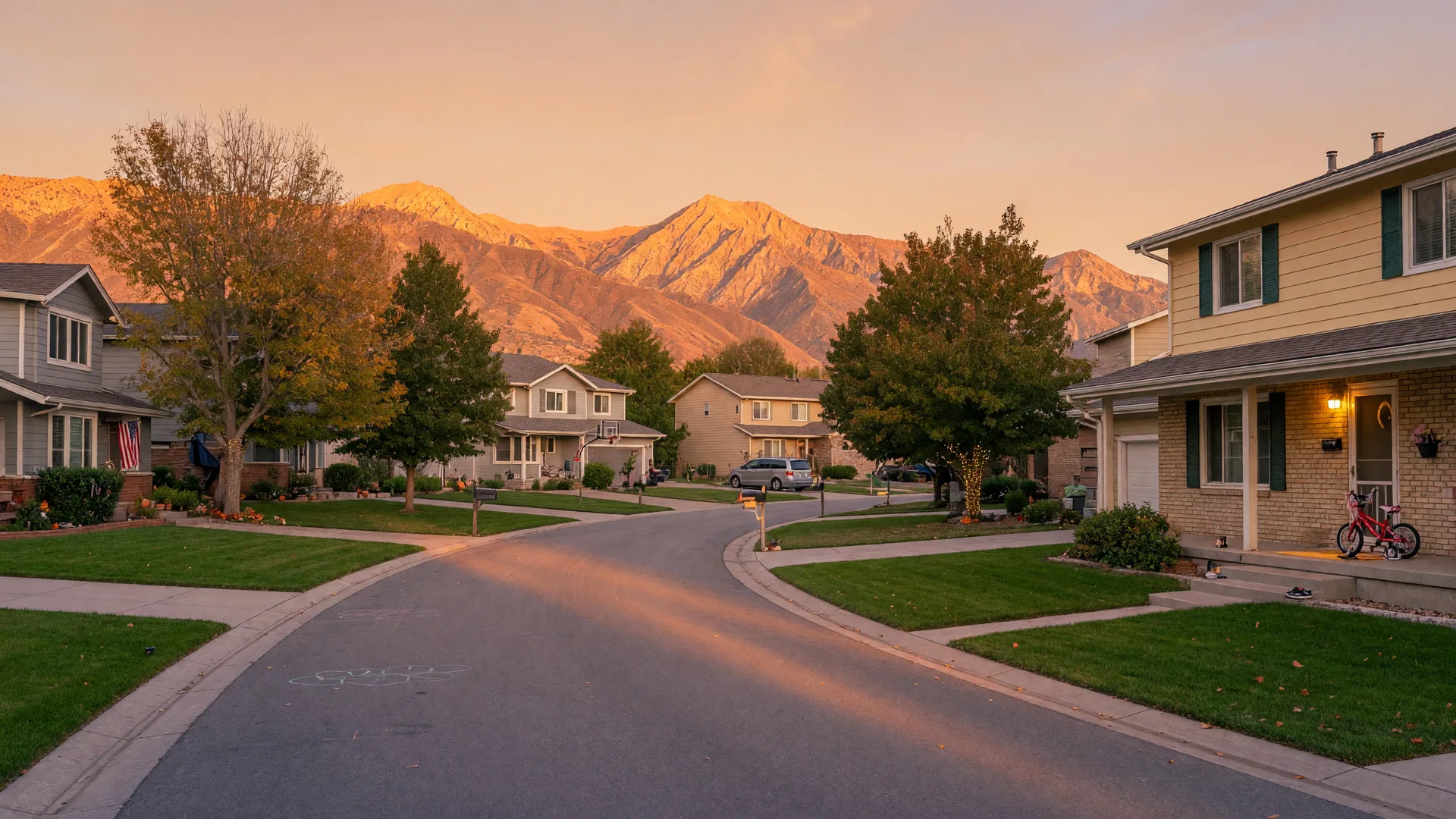
The suburbs offer the reverse trade. Communities like Sandy, Draper, South Jordan, West Jordan, Lehi, and Layton deliver what families traditionally want: space, newer homes, larger yards, quiet streets, community pools and recreation centers, and a school district identity that many parents value. The valley's suburbs are well-planned and well-served, and they have grown into genuinely complete cities with their own retail, dining, parks, and events rather than bedroom communities.
What you give up is proximity. Everything requires a drive, and some drives are longer than others: a quiet South Jordan street is lovely, but a downtown dinner or a Jazz game is a twenty-five to forty-five minute trip each way, more at peak hours. The suburb trade is space and calm now in exchange for city convenience later. Our city guides walk through the individual character of each one, and the east side versus west side guide covers how much the valley's two halves differ from each other.
The Commute Trade-Off
Commuting is where the choice becomes concrete. Living in the city, most destinations are a ten to twenty minute drive, and many are walkable or a short transit ride away. Downtown jobs, the airport, dining, and the foothills are all close, and TRAX and bus service cover much of the core. If you work downtown or in the central valley, city living quietly removes thirty to sixty minutes of driving from every day.
The suburbs trade that for longer commutes, typically twenty-five to forty-five minutes or more to downtown depending on the community and the hour, with rush-hour congestion through the usual corridors. The saving grace is that several suburbs have FrontRunner or TRAX stations, so a rail commute from places like Draper, South Jordan, or Layton can be a pleasant alternative to the freeway. The pattern to remember: living east or central keeps every trip short; living on the edges means planning time into everything.
Honest advice:
Map your actual week before you choose. The couple who lives in Sugar House and drives everywhere has a different reality than the couple in a South Jordan cul-de-sac who rides FrontRunner: both are happy, and both chose deliberately.
Housing and Cost
The relative cost picture is subtler than most people assume. In the city's hottest walkable neighborhoods, proximity carries a premium: condos and smaller homes near downtown, Sugar House, and Liberty Wells can command high per-square-foot prices. The same budget that buys a compact condo in the city can often buy a full single-family home with a yard in the suburbs, which is the classic trade in every American metro.
But the comparison is broad across both sides. The suburbs range widely, from more attainable pockets in places like West Jordan to premium bench neighborhoods in Draper and Sandy, and the city has quieter, more affordable pockets too. In relative terms the rule holds: suburbs generally give you more space for the money, and the city charges for walkability and centrality. For a city-by-city breakdown of costs, our cost of living guide is the place to start.
Lifestyle Phases
Lifestyle phases explain most of who chooses what. Young professionals are drawn to the city's energy, walkability, and short commutes, and empty nesters often circle back to the city for the same reasons after years in the suburbs. Families with kids frequently prefer the suburbs for yards, schools, community pools, and quieter streets, and Utah is famously family-oriented, which is exactly why the valley's suburbs are so strong.
A very Utah pattern is worth naming: many residents start city life in a townhome or condo, build careers and families, then move out to the suburbs for the school and yard years, and some eventually return downtown. There is no wrong direction, and no one is locked in. The honest advice is to choose for the season of life you are in now, not the one you imagine in a decade, because both options are excellent at what they do.
Utah's communities welcome everyone, and the best fit is about the neighborhood that suits your actual routine, whatever stage you are at.
Quick Answers: City vs. Suburb FAQ
Is it cheaper to live in the suburbs than downtown?
In relative terms, suburbs generally give you more space for the money, and downtown's walkable neighborhoods carry a premium for proximity. But both sides range widely, and you can find moderate pockets in the city and premium neighborhoods in the suburbs. Compare specific areas in the same week for a real answer.
Which is better for raising kids?
Most families prefer the suburbs for yards, community pools, recreation centers, and the school district setting, and the valley's suburbs are built around exactly that life. The city is also workable, with good schools as public services and tremendous walkability, but the suburban package is the traditional family pick.
Is downtown Salt Lake City safe?
Downtown Salt Lake City is generally safe and busy with pedestrians, events, and families, like any larger city its character varies by block and by hour, so it is worth neighborhood-by-neighborhood research. Crime data by area, walking the streets at different times of day, and talking to residents are the reliable ways to get a true feel for any specific address.
Can I have a yard in the city?
Yes, especially in the city's residential neighborhoods: the Avenues, Liberty Wells, and along the east bench have plenty of single-family homes with real yards. The closer you get to downtown, the more the housing shifts to condos and townhomes with patios instead of lawns. Yard size is a neighborhood question, not a city-versus-suburb absolute.
Which is better for commuting to work?
It depends on where the job is. Working downtown or in the central valley favors city living with ten to twenty minute drives or transit rides. Working in the tech corridor or defense areas favors a suburb near those employers. FrontRunner and TRAX make several suburbs genuinely commute-viable, so match the home to the office and the train line.
City or suburbs: which home base fits your week?
Utah's communities welcome everyone, and the best fit is the neighborhood that matches your routine, not a label. If you are weighing Salt Lake City neighborhoods against the suburbs, I would be glad to talk through your commute, budget, and priorities and point you in the right direction.
Reach Out