Why People Are Moving to Utah: The Great In-Migration, Explained
Utah has been one of the fastest-growing states in the country for more than a decade, and the in-migration shows no signs of slowing. People aren't just visiting the national parks and calling it a trip; they're packing up households, quitting jobs, and committing to a new state. This guide answers the honest question underneath all those headlines: why now, and why Utah? We'll walk through the economy, the cost-of-living math, the outdoors, family life, and the kinds of people who make the move, with the real trade-offs attached.
What's in this guide
The Big Picture: A State on the Move
Utah regularly leads the nation in population growth, year after year. The growth is concentrated along the Wasatch Front, the chain of valleys running from Ogden through Salt Lake City and Provo and beyond, and increasingly in Washington County in the far south, where St. George anchors a fast-growing Sun Belt-style corridor.
Two forces keep the growth going. The first is simple: jobs. The state's famously low unemployment and fast job growth have opened the door for workers in nearly every field, which is why we wrote our full breakdown of Utah's job market and Silicon Slopes for anyone weighing a move for work.
The second is momentum. As more companies open offices and more people arrive, the state builds the services, neighborhoods, and community networks that make the next wave of arrivals easier. Growth feeds growth, for better and for worse: it brings opportunity, and it also brings traffic and rising home prices. We'll be honest about both sides throughout this guide.
Cost of Living vs. the Coasts
Ask most newcomers why they came and the housing math comes up fast. Many arrivals come from California, the Pacific Northwest, Colorado, and other expensive metros, where a starter home or a decent apartment costs multiples of what it does in Utah.
The honest version of the trade: houses cost less here than in the priciest coastal markets, the overall tax picture is reasonable, and everyday expenses run manageable for most households. Move from a big coastal metro and you can often trade a smaller space for a bigger Utah one: a yard, a garage, an extra bedroom, or a mortgage instead of a rent payment.
The numbers vary by city and by what you bring with you, which is exactly why our cost of living guide breaks it down town by town. The rule of thumb newcomers keep repeating is the same: more space, less squeeze.
Mountains, Desert, and 300+ Days of Sun
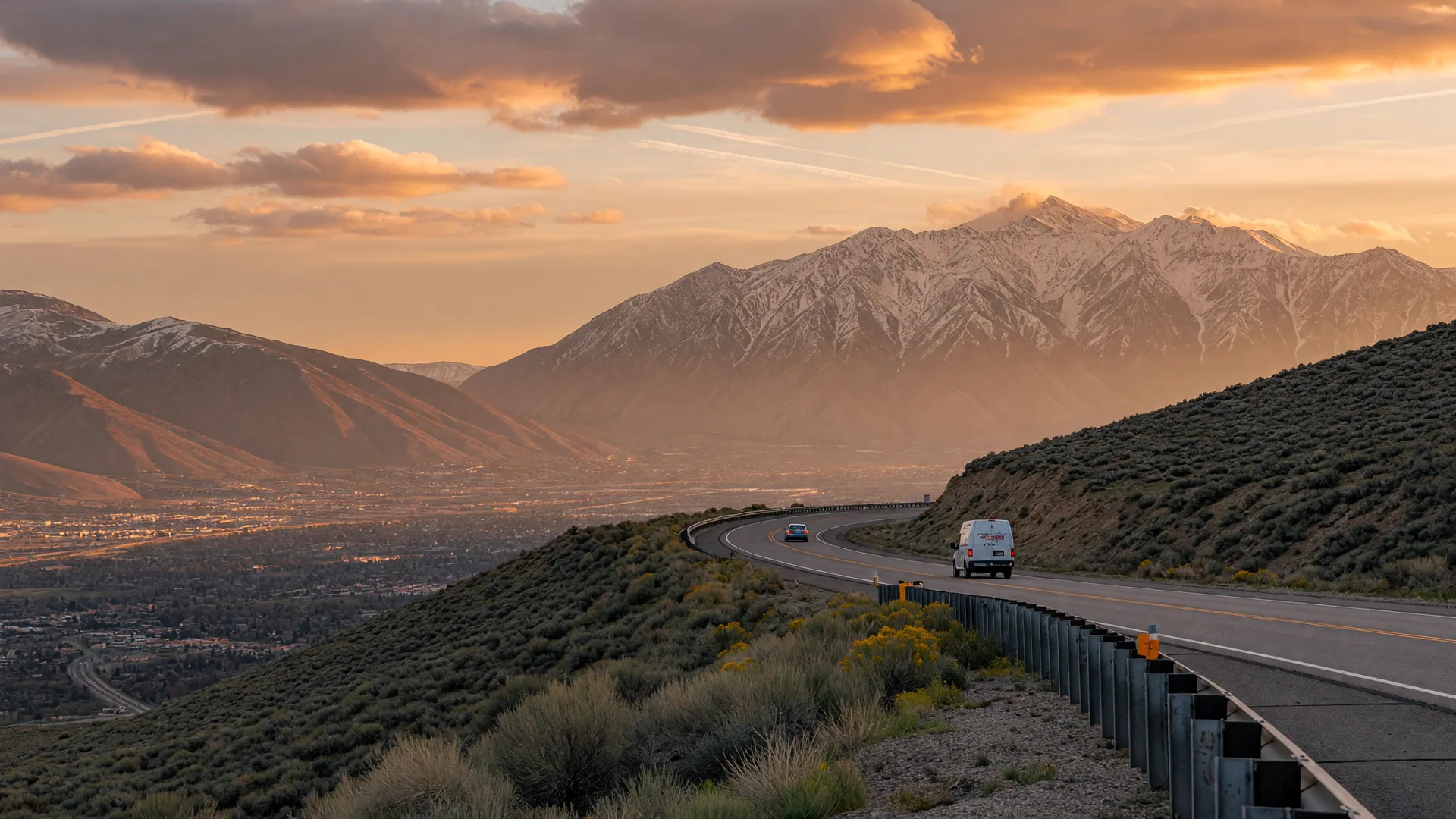
The outdoor draw is the one everyone already suspects. Utah is home to five national parks, from the arches and canyons of the south to the towering red rock walls of Zion, plus world-class skiing minutes from the Wasatch Front, thousands of miles of trails, and lakes and reservoirs for every kind of water sport.
The climate is famously sunny and dry: Salt Lake City averages about 222 sunny days a year, southern Utah's St. George tops 300, humidity is low, and there are four distinct seasons. For many people, lifestyle is the deciding factor, even when it isn't the stated reason. Jobs bring them; the mountains make them stay.
If you want the full tour of what's out there, our seasonal guide to Utah's outdoor activities covers the best of every season.
Family-Friendliness and Community
Utah is one of the youngest states in the country by median age, and family life is woven into the everyday rhythm: strong public school districts across several counties, plenty of parks and youth programs, and a calendar full of community events, from summer festivals to winter holiday gatherings.
Crime rates are low relative to many large metros, which is a big part of why so many parents say they felt comfortable here quickly. And the community culture tends to be neighborly in a way that surprises people from bigger cities: block parties, school carnivals, volunteer firework shows, that kind of thing.
We'll keep the fit honest: no place is perfect for everyone, and the culture is its own thing, not a generic suburbia. But for families that want space, schools, and a safe place to raise kids, Utah checks an unusual number of boxes.
Remote Work and the Silicon Slopes Magnet
Two forces have been feeding each other. On one side, companies keep setting up Utah offices: national tech firms, homegrown unicorns, and thousands of startups along the I-15 corridor known as Silicon Slopes, running through Lehi, Draper, Provo, and the cities between.
On the other side, workers keep arriving with remote jobs from other states, trading coastal rent for a Utah mortgage while keeping the salary that comes with it. Tech hub cities like Lehi, Draper, and Provo are among the fastest-growing communities in the state, and a whole support economy has followed them: coffee shops, gyms, daycares, schools, and every kind of service you'd expect in a young, growing place.
That pairing is the real engine of the in-migration. It isn't just one industry recruiting people; it's a self-reinforcing cycle where jobs bring workers, workers bring families, and families bring the demand that builds entire new neighborhoods.
Who Is Moving?
No single profile fits everyone, but the arrivals cluster into a few familiar patterns.
Young professionals come for opportunity and affordability: a comparable paycheck with meaningfully more left over at the end of the month. Families come for space and schools, often after their first or second kid makes the coastal apartment math stop working. Remote workers trade rent for a mortgage and gain mountains out the window. Empty nesters look south, choosing the warmth and slower pace of Washington County and communities built for an active retirement.
And then there are the returning Utahns: natives who left for school or a job and came back when life changed. Count me in that group. I grew up here, left for about a decade, and moved back sixteen years ago. Seeing the state from both sides is exactly why I started this resource: I know what it's like to leave, and I know what it's like to come home. If you're weighing either direction, I've been where you are, and I'm happy to help you think it through.
Moving to Utah: Common Questions
Why is everyone moving to Utah?
Mostly a combination of jobs and cost of living, with the outdoors as the deciding factor. Utah's economy has been among the strongest in the country for over a decade, housing and everyday expenses run well below the priciest coastal metros, and the lifestyle, from skiing to national parks, is genuinely world-class.
Is Utah still affordable compared to California?
Yes, in relative terms, especially for anyone coming from the Bay Area, Los Angeles, or San Diego. Homes cost meaningfully less, the overall tax picture is lighter in most comparisons, and daily expenses run lower. That said, Utah housing has grown more expensive as the state has grown, so "affordable" today mostly means "more affordable than the coasts," not cheap.
What part of Utah is growing the fastest?
The Wasatch Front has been the historic engine, with Utah County and the Lehi-to-Provo corridor among the fastest-growing areas in the state. Increasingly, Washington County in the far south, anchored by St. George, is growing even faster as retirees and remote workers choose warmer weather and red rock scenery.
Is Utah a good place to raise a family?
For most families, yes. The state has one of the youngest median ages in the country, strong public school districts across several counties, low crime relative to many large metros, and a community culture built around family events and activities. As with anywhere, the fit depends on your neighborhood, your school district, and your values, so it pays to do a little homework before you land.
Do people regret moving to Utah?
Most don't. The honest caveats are the winter air inversions, which can trap haze along the Wasatch Front on some days, and the growing traffic, because the state keeps building roads and still can't quite outrun the growth. Almost everyone we talk to says the trade-off is worth it: the mountains, the economy, the schools, and the community outweigh the bad air days and the commute.
Where are the new arrivals coming from?
California leads the list, followed by the Pacific Northwest, Colorado, and other Western states. There's also a steady stream from the Midwest and East Coast, plus international arrivals drawn by the tech industry and the universities. And many are returning Utahns, like me, who left and came back.
Will my remote job work in Utah?
Very likely. Utah's metro areas have strong internet infrastructure, and the state consistently ranks among the highest in the country for remote-work share, which means employers, landlords, and communities all understand the setup. A remote salary often goes further here, which is one of the biggest reasons remote workers keep arriving.
Thinking about making the move?
We've lived it from both sides, leaving and coming back. Reach out, and we'll help you figure out if Utah is the right fit for you.
Reach Out