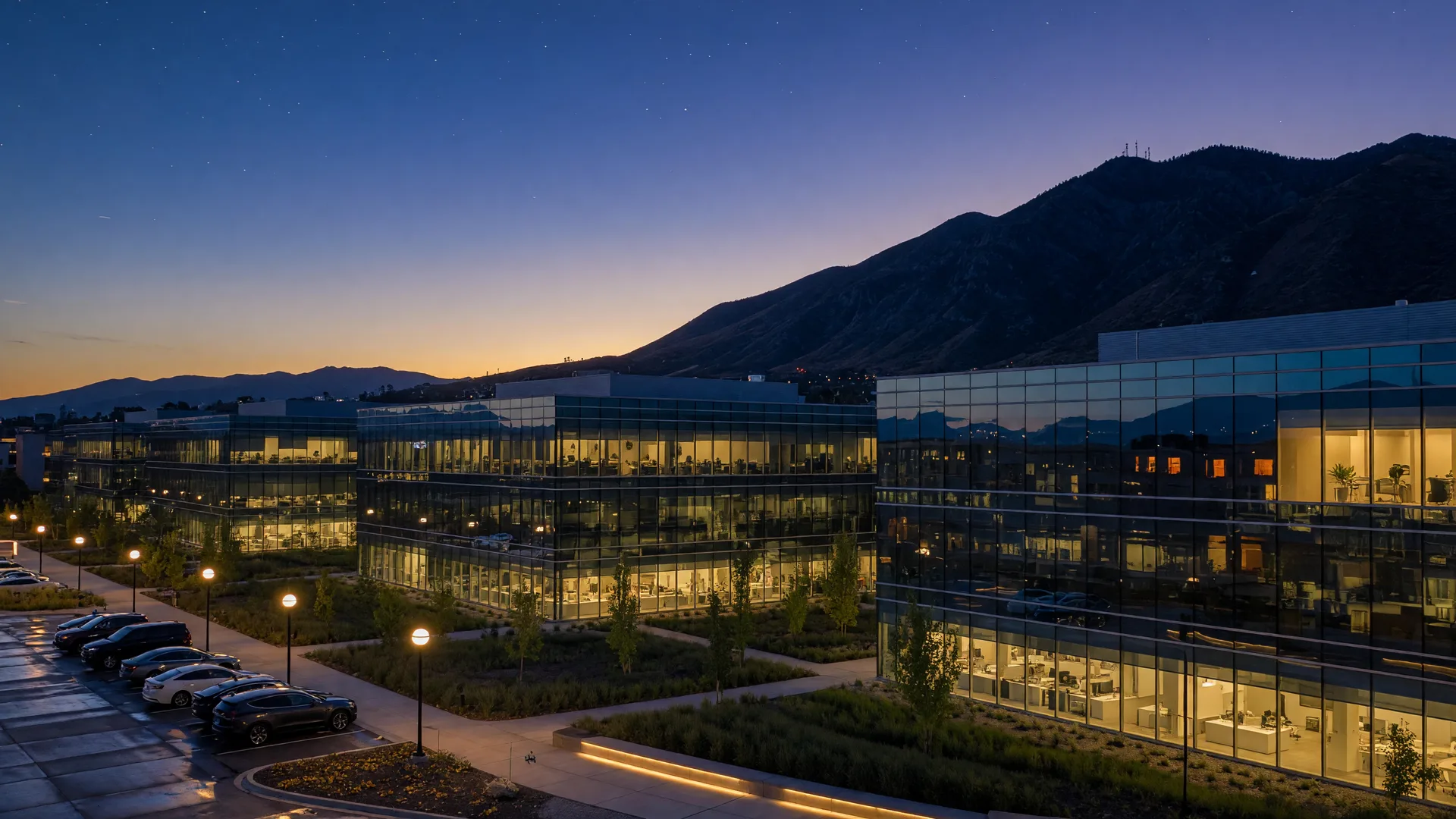
Utah's Job Market: Why Silicon Slopes Is Drawing Workers From Everywhere
Utah is no longer just a beautiful place to live; it has become a serious jobs destination. The state regularly ranks near the top of the country for job growth, wage growth, and in-migration of workers, and at the center of that story is Silicon Slopes, the tech corridor stretching roughly from Salt Lake City south through Lehi and into Provo. This guide explains Utah's job market in plain terms for people considering a move: what Silicon Slopes actually is, what the wider economy looks like beyond tech, and how to think about work, commutes, and wages before you pack.
What's in this guide
The Silicon Slopes Story
Silicon Slopes is the name for Utah's tech ecosystem, anchored along the I-15 corridor that runs from Salt Lake County south through Utah County. The name comes from the setting: instead of California's coastal flats, this tech region grew up against the Wasatch Mountains, and the "slopes" part is a nod to both the terrain and the ski culture that surrounds it.
What started as a handful of software companies has become one of the most concentrated tech regions in the country. Major public companies have major operations here, homegrown success stories like Qualtrics, Domo, and Pluralsight put Utah on the map, and a deep bench of startups and unicorns keeps the pipeline full. Add the wave of out-of-state companies opening Utah offices and large employers hiring remote-first teams in the state, and the corridor now supports thousands of companies, from five-person startups to campuses that anchor entire cities.
The density matters for job seekers. Because so many companies sit within a few miles of each other, the region has developed its own hiring ecosystem: experienced engineers, product people, and executives move between employers without relocating their families, and recruiters treat the corridor as one continuous labor market from Salt Lake City to Provo.
Beyond Tech: Utah's Wider Job Market
Tech is the headline, but the economy is genuinely broad, and that breadth is one of the reasons the state's job market is so steady. Healthcare is huge: Intermountain Health operates one of the largest healthcare systems in the nation, and hospitals, clinics, and medical groups employ tens of thousands across the Wasatch Front and southern Utah. Finance and banking have made Utah a national hub for fintech and digital banking, with major institutions keeping significant operations in the state.
Government and defense anchor northern Utah in particular, with Hill Air Force Base and the contractors that support national laboratories and defense programs. Education employs a large workforce at major universities, including the University of Utah, Brigham Young University, Utah State, and Utah Valley University. Construction and housing never stop, given the state's growth, and the outdoor industry has real momentum, with a number of outdoor companies headquartered here. Tourism and hospitality run on five national parks and the state's ski resorts, and manufacturing and logistics line the Wasatch Front, powered by freeport zones and massive fulfillment centers.
The takeaway for job seekers is simple: you do not have to work in tech to move to Utah. The state hires healthcare workers, teachers, tradespeople, warehouse operators, accountants, and nurses in volume, and the diversity of industries means the economy does not rise and fall with any single sector.
Wages, Unemployment and Job Growth
Utah's headline numbers have been consistently good for years. The state's unemployment rate has regularly ranked among the lowest in the country, and job growth has often been among the fastest, which is why employers keep adding headcount here even in slower national quarters. Wages have risen with that demand, though pay in several fields still trails the very highest-cost metros, which is exactly why the value equation works so well.
Employers also point to the workforce itself. Utah is consistently one of the youngest states in the country by median age, with a strong work ethic and high educational attainment that companies cite again and again as reasons to open or expand an office here. A young, educated, growing population is a self-reinforcing advantage: it draws employers, and employers draw more workers from out of state.
One honest caveat: strong demand means competition for housing and, in some corridors, for everyday services. The job market is a genuine draw, but it is one part of a bigger decision that also involves housing costs, schools, and commute, all of which our cost of living guide covers in detail.
Who's Moving and Why
Utah's in-migration breaks down into a few familiar patterns. Young professionals from coastal metros, especially California, arrive for the combination of career opportunity and cost-of-living relief: a comparable role with meaningfully more house and more disposable income. Remote workers keep their salaries and get a larger home, better schools, and mountains out the window, often without taking a pay cut.
Families come for the jobs plus the lifestyle: safe communities, strong schools, and outdoor recreation that is genuinely within reach of the front door. Retirees and empty nesters arrive for a different mix, including healthcare, climate, and a slower pace in places like St. George. Because Utah remains one of the youngest states by median age, the workforce keeps replenishing itself, which signals to employers that the talent pool will stay deep.
The result is a market where newcomers are the norm, not the exception. Most neighborhoods along the Wasatch Front have a healthy share of people who arrived in the last few years, which makes it easier to build a community quickly after you land. Want the bigger picture on why people are leaving other states for Utah? See our companion guide, Why People Are Moving to Utah: The Great In-Migration, Explained.
The Commute and Where the Jobs Are
Geography matters more in Utah than the map suggests. The densest job corridors are the south end of Salt Lake County and the north end of Utah County, with Lehi and American Fork sitting at the heart of the Silicon Slopes campus belt. Healthcare jobs are spread more evenly along the entire Wasatch Front, from hospital systems in Salt Lake City to regional medical centers in Provo, Ogden, and points south. Government and defense cluster in northern stretches, around Hill Air Force Base, while the south end of the state runs on St. George's growing healthcare, tourism, and remote-worker economy.
Many workers live in one county and work in another, and the commute is the trade they make for a bigger home or a particular school district. I-15 is the spine of the region, and the FrontRunner commuter rail runs from Ogden through Salt Lake City, Draper, Lehi, and Provo, which means a car-free commute is a real option when both your home and office sit near stations. The honest reality is rush hour: a 15-minute drive off-peak can stretch toward 45 minutes on a Tuesday morning, especially through the Point of the Mountain between the two valleys.
If where to live is your next question, our Lehi vs. Provo guide walks through the two cities at the middle of the corridor, and the Salt Lake City vs. the suburbs comparison covers the distance and commute trade-offs on the north end. Both are worth reading before you pick a side of the freeway.
Tips for Job Seekers Moving to Utah
- Apply before you move. Many employers hire remote-first and then bring people in, so you can interview and even start from out of state. A local address is no longer the gatekeeper it used to be.
- Be ready for a fast hiring cycle in tech. When a company has an open role it needs filled, the process can move quickly, so have your resume, references, and answers ready before you apply.
- Use the networking scene. The Wasatch Front has a thriving meetup and industry-event culture for tech, design, product, and finance. A couple of events can connect you to more of the local market than weeks of online applications.
- Choose housing with your office in mind. The same commute that is 15 minutes off-peak becomes 45 in rush hour, so drive the route at the times you would actually travel before you commit to a city.
- Check salary norms against the lower cost of living. Offers here may look smaller than coastal numbers on paper, but the value in housing and daily expenses often more than makes up the difference.
- Know that top employers are in multiple cities. Many large companies have offices along the whole corridor, so your job search can target Salt Lake City, Lehi, American Fork, or Provo rather than a single address.
Utah Job Market: Common Questions
How is the job market in Utah right now?
Strong. Utah's unemployment rate has consistently ranked among the lowest in the country, and job growth has often been among the fastest, with particular demand in tech, healthcare, construction, and finance. Employers are actively recruiting from out of state.
What is Silicon Slopes?
Silicon Slopes is the name for Utah's tech ecosystem, concentrated along the I-15 corridor from Salt Lake County through Lehi and into Utah County. The name nods to the mountain setting, and it now represents one of the most concentrated tech regions in the country.
Which companies are in Silicon Slopes?
Major public companies like Adobe have large Utah operations, and homegrown names like Qualtrics, Domo, and Pluralsight grew up here. Beyond the big names, thousands of startups and fast-growing firms span software, cloud, fintech, and healthcare technology across the corridor.
Is Utah good for remote workers?
Very. Remote workers keep their salaries and gain more house, lower taxes than many coastal cities, and world-class recreation out the back door. The state also has strong internet infrastructure in metro areas, and a growing community of remote employees across the Wasatch Front and in St. George.
What are the biggest industries in Utah besides tech?
Healthcare, with one of the nation's largest systems in Intermountain Health; finance and fintech; government and defense anchored by Hill Air Force Base; education at the major universities; construction; the outdoor industry; tourism and hospitality tied to the national parks and ski resorts; and manufacturing and logistics along the Wasatch Front.
Do I need to live near my job in Utah?
Not necessarily, but traffic is the catch. Many people live in one county and work in another using I-15 and the FrontRunner rail line. The same route that is quick off-peak can take three times as long in rush hour, so test the commute at the hours you would actually drive.
Are salaries in Utah competitive?
Competitive for the market, with wages that have risen steadily with demand. Offers can look smaller than the highest-cost tech metros, but the lower cost of housing and everyday living usually closes most of the gap, often leaving you with more left over each month.
Is it hard to find a job in Utah as an outsider?
Not as hard as it used to be. Employers regularly recruit from out of state, remote-first hiring is common, and the region's tight labor market means qualified applicants get noticed. People move first and find work after a move, but applying before you arrive is the smoother path.
Curious whether Utah's job market fits your career?
Reach out. We'll give you the real scoop on where to live, work, and thrive.
Reach Out